|
The first Danish people came to the country during the Roman period, and there is evidence of both Jute and Celtic settlement during this period. Romans had trade routes and contacts with native tribes in Denmark and Roman coins have been found in Denmark.
|
Click for a larger picture
|
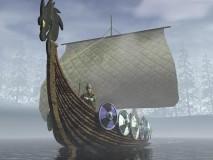
The 8th-11th centuries were periods of great exploration and settlement by Vikings (the "ship people" from Scandinavia), ranging from Greenland and Newfoundland to the north an west, closer to home in Ireland and Britain, and penetrating as far south as Constantinople along the great European rivers. In the 10th century the northern part of England was occupied by the Danes (an area known as the "Danelaw"). |
| After the 11th century Denmark became more united under a feudal king and its influence extended further into the Baltic areas. Its merchants were part of the Hanseatic League. In the 14th century the Scandinavian countries Denmark, Sweden and Norway were united. Denmark and Norway remained so until the 19th century. In 1864 Denmark was forced to cede Schleswig-Holstein to Prussia. |
During the First World War Denmark remained neutral. The vote in a plebiscite following the war returned northern Schleswig (Sønderjylland) to Denmark. In 1940 Denmark was occupied by German forces. The Danish resistance managed to evacuate most of Denmark's Jewish population to neutral Sweden.
After WW2 Denmark was one of the founding members of the United Nations and NATO, and in 1973, after a public referendum, joined the European Economic Community (now the European Union) alongside Britain and Ireland. In 1992-93 Denmark opted out of four elements of the EU Maastrict Treaty - the Common Security and Defence Policy, citizenship, police and justice and specifically the adoption of the euro. The opt-outs still remain a controversial political issue in Danish politics.
|


